Open call for the East Asian VLBI Network (EAVN)
Call for Proposals for the EAVN for the 2025A semester is open. Proposal submission deadline: 1 November 2024, 8:00 UT Image: © KASI


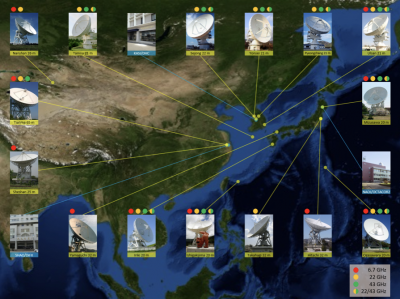
Call for Proposals for the EAVN for the 2025A semester is open. Proposal submission deadline: 1 November 2024, 8:00 UT Image: © KASI
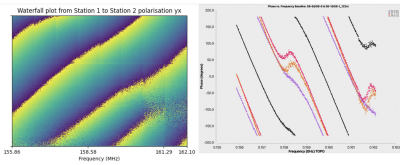
First fringes refers to the successful correlation of data from separate antennas stations – in this case two stations – signifying that SKA-Low has begun to work as an interferometer. Both of the SKA Observatory’s telescopes – SKA-Low in Western Australia and its counterpart SKA-Mid in South Africa’s Northern Cape – are radio interferometers. They [...]
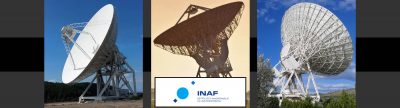
The call for proposal for observing with the INAF telescopes is open. See here. INAF participates with the Sardinia Telescope (SRT) in the Transnational Access program of the Opticon Radionet Pilot program (ORP), which is funded by the EC Horizon 2020 Research and Innovation Programme under grant agreement No. 101004719. For observations with the STR [...]
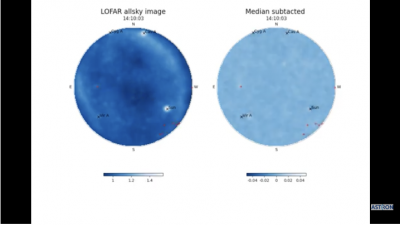
Observations with the LOFAR (Low Frequency Array) radio telescope last year showed that first generation Starlink satellites emit unintended radio waves that can hinder astronomical observations. New observations with the LOFAR radio telescope, the biggest radio telescope on Earth observing at low frequencies, have shown that the second generation ’V2-mini’ Starlink satellites emit up to [...]

AtLAST is a concept for a next generation 50-meter class single-dish astronomical observatory operating at sub-millimeter and millimeter wavelengths, run as a facility telescope by an international partnership and powered by renewable energy. AtLAST has received funding from the European Union’s Horizon 2020 research and innovation programme under grant agreement No. 951815 Furthermore, AtLAST announced that the [...]
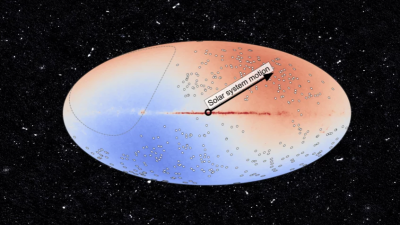
Using data from the MeerKAT radio telescope, an international team of astronomers from the MeerKAT Absorption Line Survey (MALS) collaboration have compiled the largest catalog of radio sources from any MeerKAT survey to date. With this catalog, they were able to make a measurement of the cosmic radio dipole, a cosmological effect that arises from [...]
RadioNet newsletter 08/2024 issued. Read here.
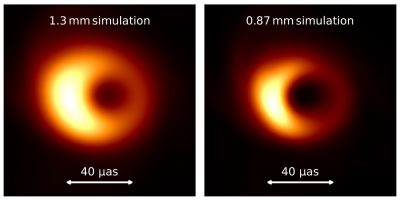
The EHT recently imaged the shadows around the supermassive black holes in M 87 and Sgr A* at a wavelength of 1.3mm. Since angular resolution increases with decreasing observing wavelength, observations at a shorter wavelength provide an even sharper view into the immediate surroundings of black holes. A new publication on results of a VLBI [...]

The European Commission launched a call for nominations of scientists to be shortlisted for future membership of the Group of Chief Scientific Advisors (GCSA). The group provides high-quality, timely and independent scientific advice to the College of European Commissioners on any subject, including on policy issues that the European Parliament and the Council consider to be of [...]

The German Astronomical Society awards the Karl Schwarzschild Medal to Prof. Dr. Anton Zensus, Director at the Max Planck Institute for Radio Astronomy in Bonn. This highest award for astronomers in Germany recognizes his leading role in the development of radio astronomical observation methods with very high angular resolution and sensitivity. The medal will be [...]